Understanding Preschool Students’ Conflicts as a Spiderweb
By the time you’ve finished your morning coffee, three-year-old Aarav has already cried, snatched a crayon, forgiven his best friend, and moved on, entirely unbothered. You, however, are still standing in the middle of the classroom, wondering what just happened.
Welcome to the world of preschool conflict, one of the most misread, most mismanaged, and most misunderstood phenomena in early childhood education.
The Web Nobody Warned You About
Picture a spiderweb. Not the messy, wind-blown kind caught in a corner. The architectural kind: precise, radial, interlocking. Each thread connects to another. A touch at one edge sends a tremor through the entire structure.
Now picture a preschool classroom at 10 a.m.
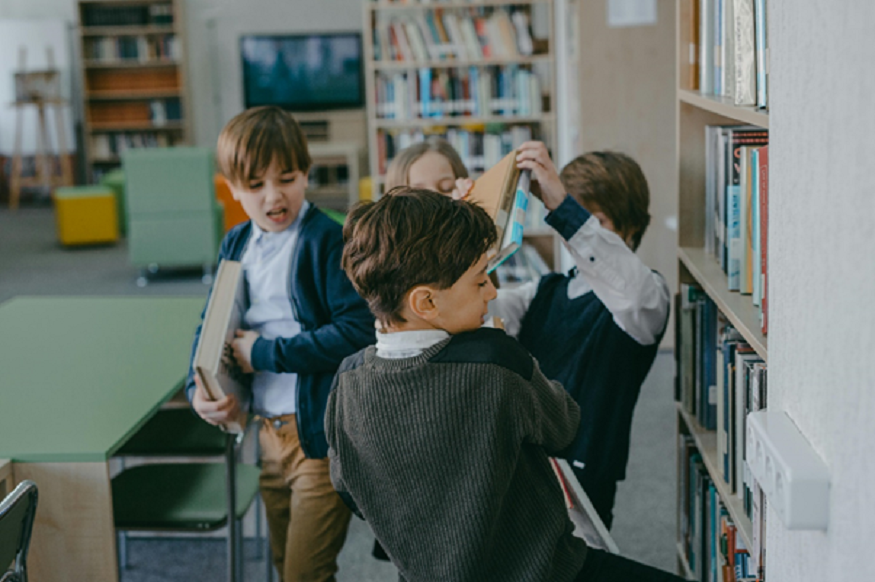
Mia wants the red block. Rohan already has it. Anaya sees Rohan has something Mia wants and, because solidarity is instinctive at four, she steps in on Mia’s behalf. The teacher redirects Anaya. Another child starts crying because the teacher’s tone was sharp. Someone else knocks over a tower, accidentally, but the timing is catastrophic. Within forty seconds, five children are emotionally dysregulated, and the source? One red block.
That is the spiderweb. Not a straight line from cause to effect, but a trembling, interconnected web of emotions, relationships, developmental needs, and unspoken social hierarchies. To look at a preschool conflict and see only two children fighting over a toy is to stare at a web and notice only one thread.
Why the Spiderweb Metaphor Matters
The traditional response to toddler conflict follows a comfortable formula: separate the children, identify the aggressor, ask for an apology, and redirect. Simple. Clean. Efficient.
Except it isn’t.
Research in developmental psychology consistently shows that children between ages two and five are not simply misbehaving when they fight; they are, in the truest sense, learning to be human. They are navigating impulse control, theory of mind, emotional vocabulary, fairness, ownership, and social belonging, all simultaneously, with a prefrontal cortex that won’t fully mature for another two decades.
Every conflict in a preschool classroom is a node in the web that is connected to a child’s sleep the night before, the tone of the morning drop-off, a subtle social slight that happened three days ago, a developmental milestone being pushed against, a hunger pang not yet articulated. A good early childhood educator doesn’t just resolve the conflict. They read the web.
The Threads That Make Up the Web
Here are the key threads that make up the web: emotions, language, social skills, environment, and developmental readiness:
-
The Developmental Thread
Children at this age are egocentric, not selfishly, but neurologically. The concept that another person’s wants are as real as mine is genuinely novel territory. Conflict isn’t a character flaw; it’s the friction of that concept being tested in real time. A child who grabs isn’t bad. They are at the exact developmental edge where the concept of sharing is just beginning to make sense.
-
The Emotional Thread
Preschoolers don’t have the language to name their feelings with precision. What looks like aggression is often frustration. What looks like defiance is often overwhelming. What looks like attention-seeking is often a bid for connection. Skilled educators learn to read the emotion beneath the behaviour, and that skill is neither instinctive nor accidental. It is trained.
-
The Social Thread
Even at three and four, children are building social architectures: friendships, alliances, hierarchies. Conflicts often carry social meaning invisible to adult eyes. A child who is persistently excluded may eventually lash out; a child who is always the leader may struggle when challenged. The conflict you see is rarely the conflict that is happening.
-
The Environmental Thread
Space matters. Noise levels matter. The number of available resources matters. A classroom that is visually cluttered, acoustically overwhelming, or short on materials is a classroom that manufactures conflict. The web, in this case, is partly structural.
Reading the Web: What Skilled Teachers Actually Do
The moment a conflict erupts, an untrained eye sees chaos. A trained educator sees data.
They notice who is involved and what their baseline behaviours have been that morning. They notice where the conflict is happening; certain zones of a classroom consistently produce more friction. They notice when conflicts peak before transitions, just before lunch, and during unstructured time.
They do not rush to resolve. They pause, observe, and when they do intervene, they name emotions rather than assign blame. “It looks like Rohan is feeling frustrated right now. Mia, you really wanted that block.” This simple reframe shifts the narrative from crime-and-punishment to acknowledgement-and-problem-solving.
They hold space for discomfort without extinguishing it. Because conflict, navigated with care, is one of the most powerful learning opportunities in a young child’s day.
The Teacher at the Centre of the Web
Here is the uncomfortable truth that early childhood education often avoids: the educator is not outside the web. They are in it.
A teacher who is tired brings a shorter fuse. An undertrained teacher brings anxiety into conflict moments. A teacher who was never taught how to regulate their own nervous system cannot co-regulate a dysregulated four-year-old. Their emotional state becomes another thread, and it vibrates through the entire room.
This is precisely why the quality of teacher training matters so profoundly. Institutions serious about early childhood outcomes recognize that training educators to understand child development is not a checkbox. It is the single most impactful investment in a child’s formative years.
Programmes that specialize in Pre and Primary Teacher Training in Mumbai are building exactly this kind of depth. They are equipping educators not just with classroom management techniques, but with the observational acuity, emotional intelligence, and developmental knowledge to truly read and respond to the complexity of young children’s social lives.
Conflict as Curriculum
The most radical and most evidence-backed reframe in early childhood education is this: conflict is not a disruption of learning. It is learning.
When two children negotiate over a toy and resolve, they are practising cooperation, compromise, and perspective-taking. When a child is helped to articulate their anger instead of acting on it, they are developing emotional regulation that will serve them for life. When a teacher holds a conflict lightly enough to let children work through it, with guidance, not intervention. They are building the neural architecture of resilience.The web is not the enemy. The web is the curriculum.
Bottom Line
Educators who work with young children deserve more than a weekend workshop and a poster about emotions on the wall. They deserve rigorous, reflective training that treats the complexity of early childhood with the seriousness it commands.
The best teacher training institute in Mumbai will teach its students not just what to do when a preschool fight breaks out but why it happened, what it means developmentally, how to respond in ways that honour both children, and when to step back and let the web do its own repair work.
Because here is what every great early childhood educator eventually learns: children are extraordinarily capable. They are not fragile. They do not need conflicts to be erased from their experience. They need adults who understand the web and who trust them to learn how to move through it.













Post Comment
You must be logged in to post a comment.